Davao City has been celebrating the Kadayawan Festival every third week of August since its beginning in 1988.
Called the “festival of all festivals,” it focuses on Davao’s cultures and arts, and acknowledges its indigenous people, as well as being a thanksgiving for the bounty of Davao’s harvest of agricultural products, especially fruits and flowers.
The festival’s name is from the friendly greeting “Madayaw” — the Dabawenyo word “dayaw” means good, valuable, superior or beautiful.
The grand finale of the 2017 Kadayawan sa Davao Festival is on August 20 (Sunday).
Davao is an agricultural basin of the Philippines, so the area is known for fresh produce all year round!
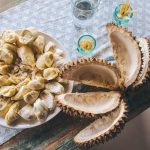
Fruits that Davao is known for: Durian (the king of fruits), Mangosteen, Rambutan, Suha (pomelo)
The Davaoeños really know sugba (a method of grilling and broiling) — especially when it comes to the tuna. It’s never overcooked, always juicy and moist; spicy, and a little sweet.
Other dishes that Davao serves very well: balbacua (a stew made with oxtail and beef), shrimp and pomelo salad, imbao (clams), hinalang (a soup similar to nilagang baka), lechon, kinilaw, bisukol (snails)
But above all, it is TUNA that represents the city of Davao: tuna panga (jaw), tuna belly, bihod (tuna roe), bagaybay (tuna sperm), ubol-ubol (tuna innards)
Bagaybay (tuna sperm) has been called the “foie gras of the sea.”
Restaurants to try in Davao: Doods Inihaw, Ellen’s Tuna Queen, and Yellow Fin Tuna for kinilaw. Marapangi Farms for bisukol. Kakimkris for lechon.