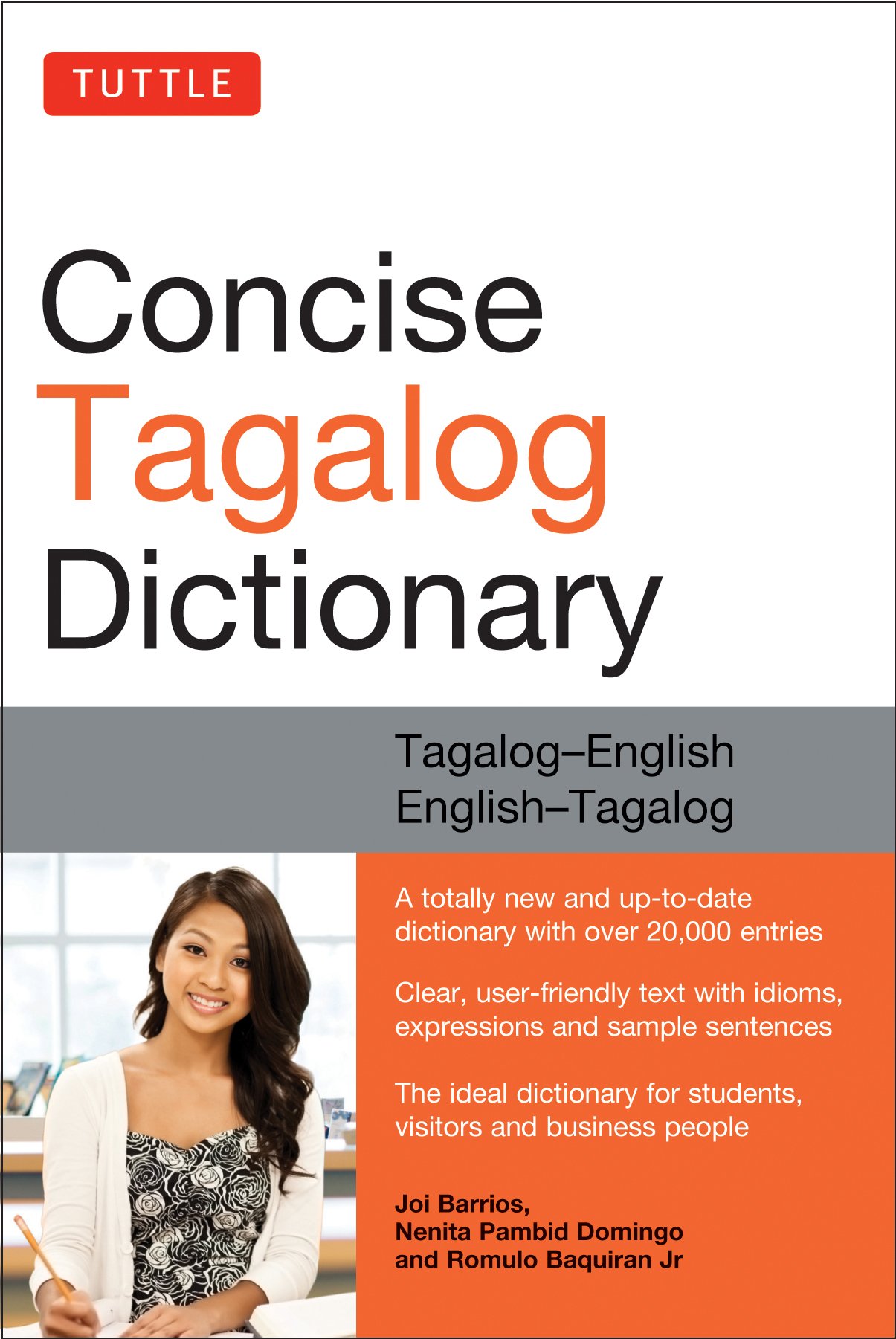
This dictionary contains English, Spanish and Tagalog words from the early 20th century, quite a few of which are obsolete. The spelling and meaning of the words herein may be slightly different from current usage. Still, we believe it is a useful reference for those studying Philippine literature and documents from that era.
Chime, n. [cháim]
Armonía, consonancia.
Pagkakatugma.
Chime, v. [cháim]
Sonar con armonía.
Mátugmâ, itugmâ.
Chimera, n. [kimíra]
Quimera.
Sigalót, káalitan.
Chimerical, adj. [kimérical]
Quimérico.
Magugunihín.
Chimney, n. [chímni]
Chimenea.
Chimenea, bungbong ó butas sa labas ng̃ bubung̃an na pálabasan ng̃ usok.
Chin, n. [chin]
Barba.
Babà.
China, n. [cháina]
China.
China, kainsikan, sungsong.
Chincough, n. [chíncaf]
Tos convulsiva.
Ubong malakas.
Chine, n. [cháin]
Espinaso.
Gulugod.
Chinese, adj. [cháinis]
Chino, a.
Bagay sa kainsikan.
Chink, n. [chink]
Grieta, hendidura.
Bitak, gwang.
Chink, v. [chink]
Henderse, abrirse.
Pumwang, gumwang.
Chinese, n. [cháinis]
Chino, natural de China.
Insík. INTSIK, INSIK, TSINO
Random notes on Chinese food in the Philippines from decades ago:
Panciteria, aletas de tiburon, morisqueta tostada, agrio dulce (sweet-sour pork), lumpia Shanghai, pinsec frito (fried wonton), torta de cangrejo, pancit, camaron rebozado dorado con jamon.
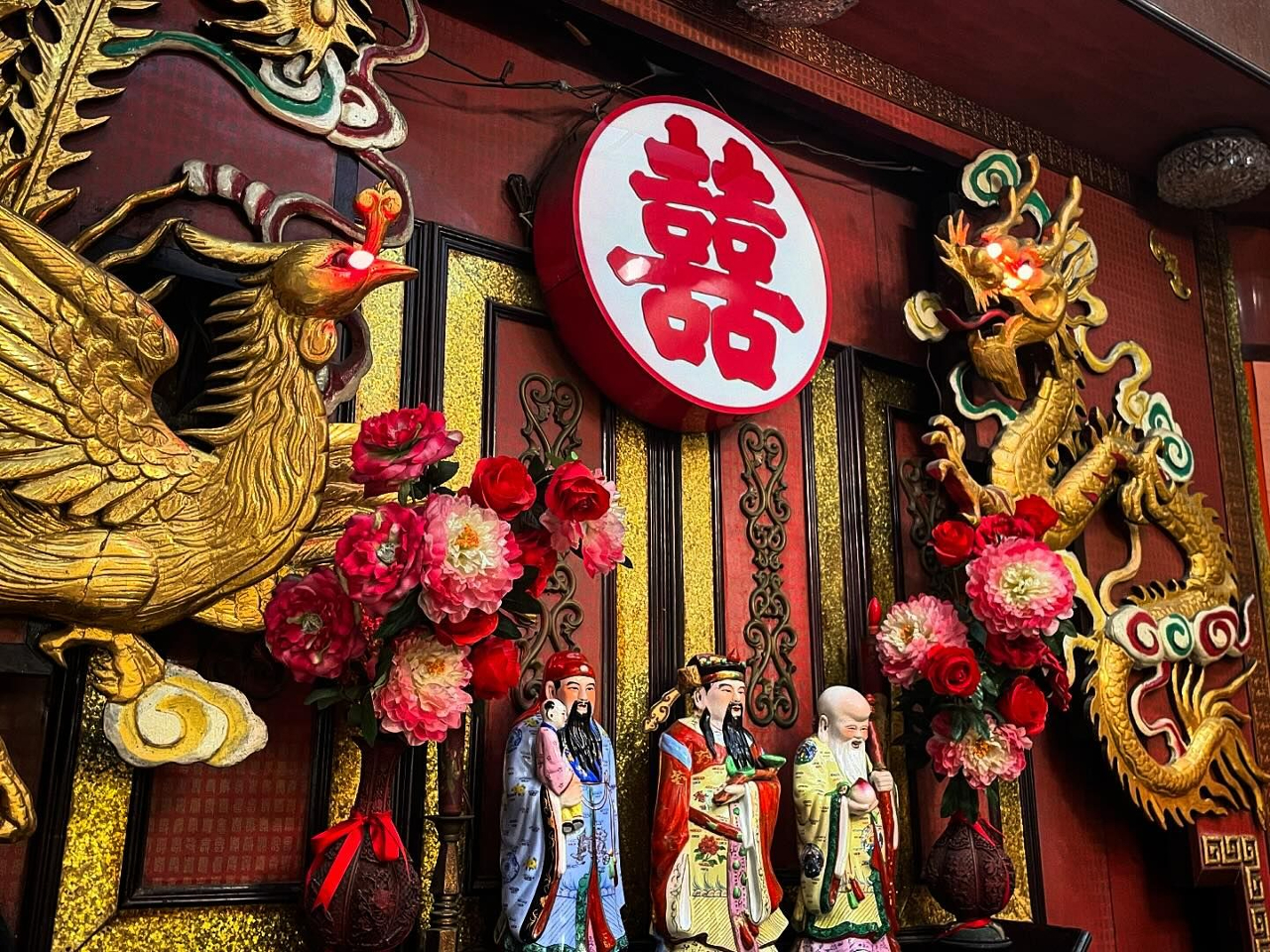
Iconic, very traditional decorations of a Chinese restaurant.
The large Chinese character in red means double happiness.
The creature on the right is a dragon, while the one on the left is a phoenix. They are regarded as auspicious creatures symbolizing good fortune and prosperity in Chinese culture.
The three men in the middle are known as the star gods: Fu Xing, Lu Xing and Shou Xing. They represent fortune (fú 福), prosperity (lù 禄) and longevity (shòu 寿).